A Shared-Autonomy Construction Robotic System for Overhead Works

David Minkwan Kim∗1, K. M. Brian Lee∗2, Yong Hyeok Seo∗1, Nikola Raicevic∗2, Runfa Blark Li∗2, Kehan Long2, Chan Seon Yoon3, Dong Min Kang3, Byeong Jo Lim3, Young Pyoung Kim3, Nikolay Atanasov2, Truong Nguyen2, Se Woong Jun1, Young Ouk Kim1
1Korea Electronics Technology Institute (KETI), 2University of California, San Diego, 3ITONE Inc.
∗ Equal contribution

Abstract

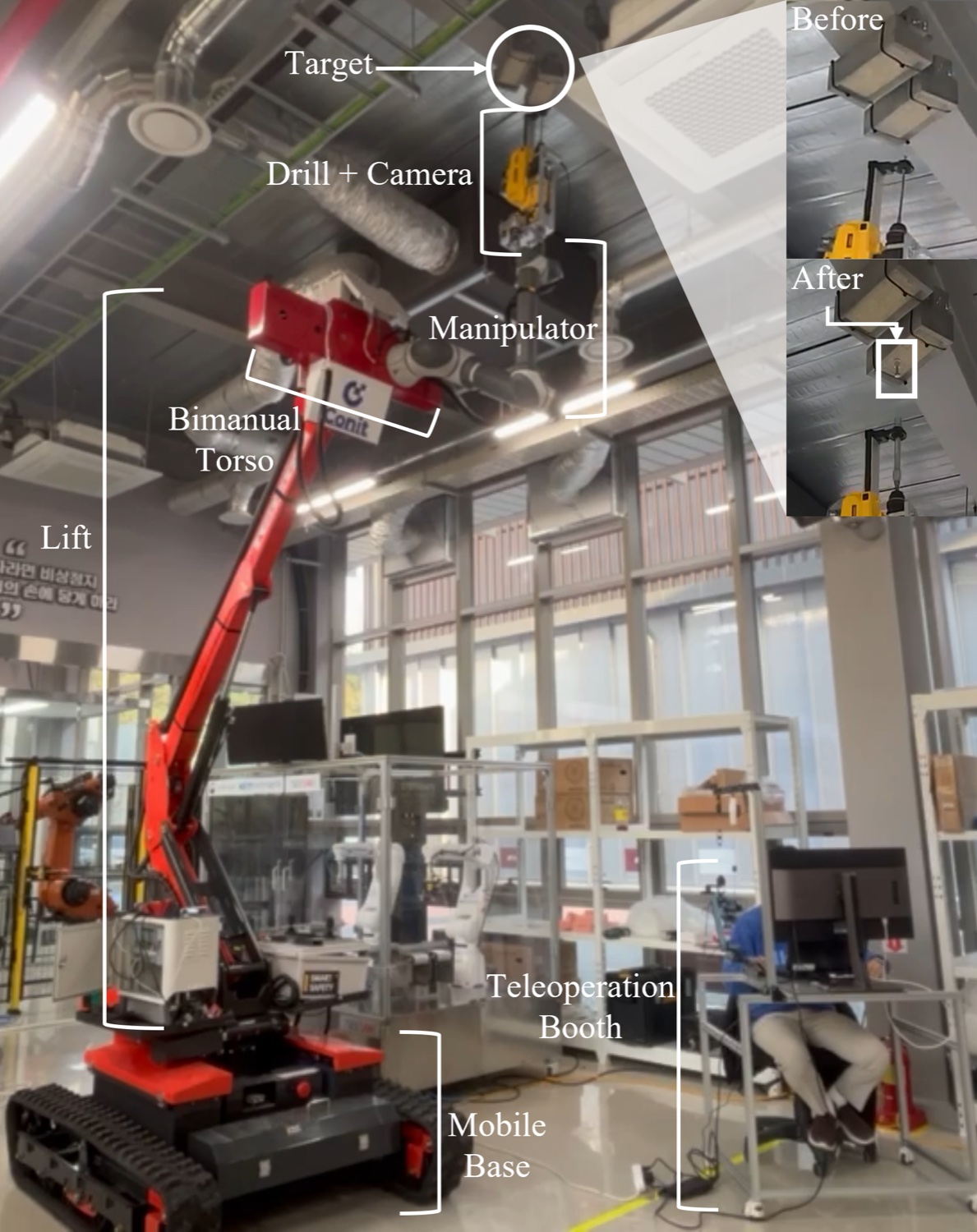
We present the ongoing development of a robotic system for overhead work such as ceiling drilling. The hardware platform comprises a mobile base with a two-stage lift, on which a bimanual torso is mounted with a custom-designed drilling end effector and RGB-D cameras. To support teleoperation in dynamic environments with limited visibility, we use Gaussian splatting for online 3D reconstruction and introduce motion parameters to model moving objects. For safe operation around dynamic obstacles, we developed a neural configuration-space barrier approach for planning and control. Initial feasibility studies demonstrate the capability of the hardware in drilling, bolting, and anchoring, and the software in safe teleoperation in a dynamic environment.

Two-stage lift

Vertical motion of a torso from 437 mm to 3,680 mm

Dynamic Gaussian splat mapping

DynaGSLAM for photorealistic visual feedback of dynamic, cluttered construction sites

Safe planning and control

Neural configuration-space barrier approach for planning and control around dynamic obstacles

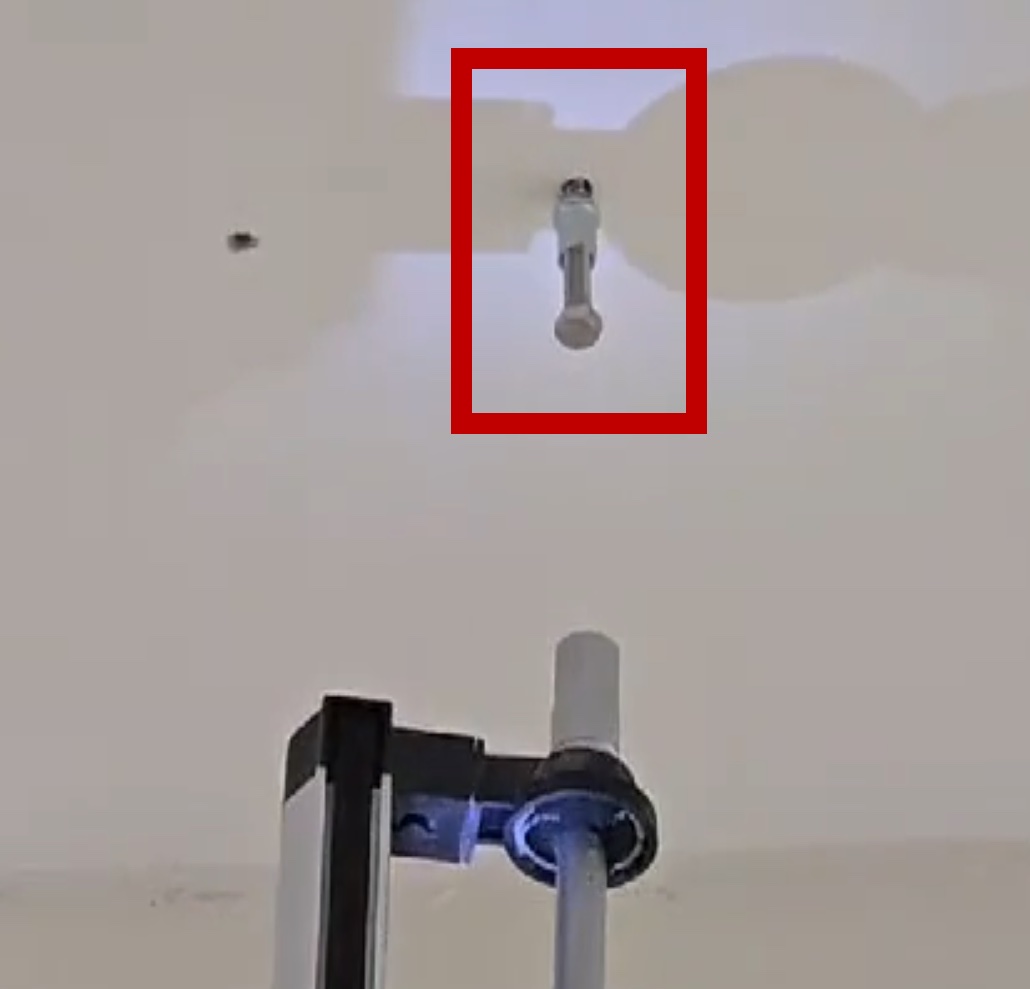
Our system performing drilling, bolting, and anchoring tasks
Fig. 1: Our system performing drilling, bolting, and anchoring tasks in a laboratory setting.

System Overview

Construction faces worsening labor shortages due to the tough and risky nature of the job, often referred to as “dirty, dull, and dangerous (DDD)” tasks. We introduce the ongoing development of a robotic system designed for overhead ceiling work, one of the most physically straining jobs in construction. A key challenge is ensuring safety and situational awareness when teleoperating in real construction sites with many moving objects and occlusions.
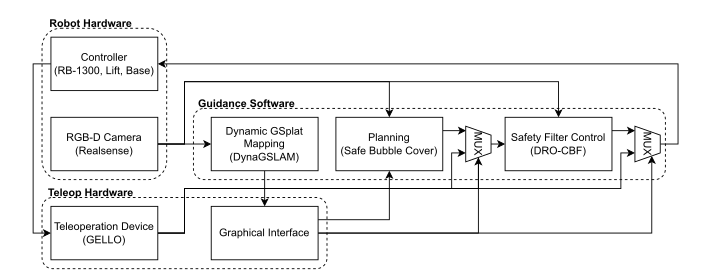

System overview Fig. 2: System overview.
Given RGB-D images from the RealSense D435 camera, we construct a 3D Gaussian splat for visual teleoperation using DynaGSLAM, which is used for visual feedback in the operator graphical interface. A neural configuration-space barrier (NCSB) is constructed from the RGB-D images for safe planning and control. The NCSB is used to plan joint trajectories to desired end-effector poses, and to “filter” both teleoperation and autonomy commands for collision avoidance against dynamic obstacles.

Hardware Platform

Robotic System

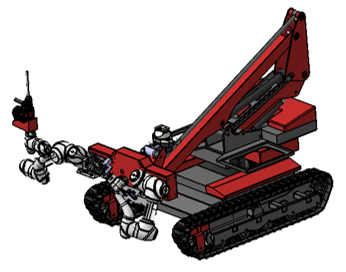
The robot hardware consists of a mobile base, a two-stage lift, and a manipulator.
  • The two-stage lift enables vertical motion of a torso from 437 mm to 3,680 mm. The torso is designed to accept up to two manipulators.
  • Currently, a Rainbow Robotics RB10-1300 manipulator is horizontally mounted on the torso and supports up to 10 kg of payload.
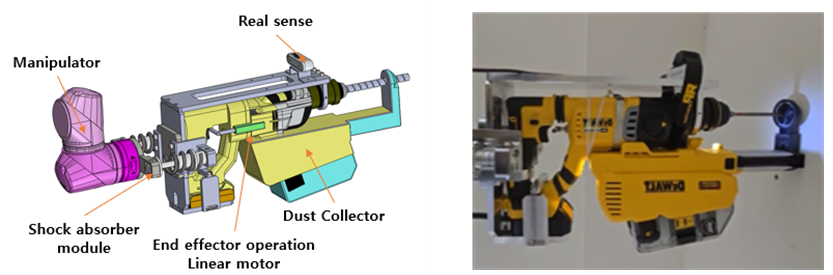
  • A custom end-effector is attached for drilling, bolting, and anchoring, with a damping module placed between the drill and manipulator to reduce load impact.
  • A pan-tilt VR camera on top of the torso provides real-time 3D visualization, while a RealSense D435 camera above the drill offers local visual feedback during tasks.
  • The mobile base measures 2,660 mm × 1,350 mm × 1,710 mm and reaches speeds up to 2.4 km/h including the lift and manipulator.
  • Both the base and lift can be remotely controlled via UART communication. The system is optimized for ultra-low-latency control.
Envisioned dual-arm construction robot configuration with two manipulators on the torso
Fig. 8(a): Dual-arm construction robot — envisioned hardware improvement
A custom drilling end-effector assembly
Fig. 3: A custom drilling end-effector assembly

Teleoperation Booth

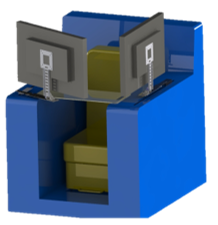
The teleoperation booth is equipped with an operator PC, a monitor for visual inspection of the site, as well as a haptic device for control.
  • Control commands are transmitted from the operator PC to the robot PC via WebRTC over a 5G network, enabling low-latency operation even in beyond-visual-line-of-sight (BVLOS) settings.
  • The monitor offers photorealistic visual feedback of the site using DynaGSLAM.
  • Physical feedback and commands are provided through a haptic device based on GELLO.
Envisioned teleoperation booth
Fig. 8(b): Teleoperation booth — envisioned hardware improvement

Software


A. Dynamic Gaussian Splat Mapping

We use DynaGSLAM from our prior work to provide photorealistic visual feedback of dynamic, cluttered construction sites. Given RGB-D images, DynaGSLAM reconstructs the scene as a set of Gaussian blobs \(\mathcal{G} = \{(\mathbf{m}_i(t), \Sigma_i, \alpha_i, \mathbf{sh}_i)\}\), with means \(\mathbf{m}_i(t)\), covariances \(\Sigma_i\), transparency \(\alpha_i\), and spherical harmonics coefficients \(\mathbf{sh}_i\). It produces photorealistic rendering of moving objects by formulating the means \(\mathbf{m}_i(t)\) as time-varying and modeling their temporal evolution using cubic Hermite splines. The Gaussians are rendered and optimized against the RGB-D images using alpha blending: $$I(\mathbf{v},t)=\sum_{g_i\in\mathcal{G}(t)} c_i f(\mathbf{v},g_i)\prod_{i}(1-f(\mathbf{v},g_i)), \tag{1}$$ where \(c_i\) is the color of Gaussian \(g_i\) given spherical harmonics \(\mathbf{sh}_i\), and \(f(\mathbf{v},g_i)=\alpha_i N_{2\mathrm{D}}(\mathbf{v};P\mathbf{m}_i(t),P\Sigma_i P^T)\) is the contribution of Gaussian \(g_i\) at pixel \(\mathbf{v}\) and time \(t\). \(P\) is the affine projection transform to the image plane, and the Gaussians are ordered relative to the query viewpoint.

B. Neural Configuration-Space Barrier

Given an RGB-D pointcloud \(\mathcal{P}\), we consider the problem of planning and executing a manipulator trajectory that achieves a desired end-effector pose while avoiding dynamic obstacles. Safety is encoded as an NCSB defined using the configuration-space distance field (CDF). With \(\mathbf{q}\in\mathbb{R}^N\) the manipulator configuration and \(\mathcal{B}(\mathbf{q})\subset\mathbb{R}^3\) its workspace geometry, the CDF \(d:\mathbb{R}^N\times\mathbb{R}^3\rightarrow\mathbb{R}\) is the closest distance in the configuration space (i.e. joint angles) to collision with a workspace point: $$d(\mathbf{q},\mathbf{p})=\min_{\mathbf{q}^\star}\|\mathbf{q}-\mathbf{q}^\star\|,\ \text{s.t. }\mathbf{p}\in\partial\mathcal{B}(\mathbf{q}^\star). \tag{2}$$ The CDF is approximated with a neural model \(\hat{d}_\theta \approx d\) with weights \(\theta\). The NCSB is \(h_\theta(\mathbf{q},\mathcal{P})=\min_{\mathbf{p}\in\mathcal{P}} \hat{d}_\theta(\mathbf{q},\mathbf{p})\), so that \(h_\theta(\mathbf{q},\mathcal{P})\ge 0\) represents safety. To plan a trajectory satisfying this constraint, we use the safe bubble cover algorithm, which exploits the Lipschitz property of \(h_\theta\) to construct spherical safe regions around sampled configurations, obviating collision checking within them and dramatically reducing computation time for faster re-planning.
The plan does not consider uncertainties in the pointcloud \(\mathcal{P}\) and the CDF parameters \(\theta\). To execute actions that are robustly safe against these uncertainties, we use the distributionally robust control barrier function (DR-CBF) formulation from our prior work: $$\begin{aligned} &\mathbf{u}^\star=\min_{\mathbf{u}}\|\mathbf{u}-\mathbf{u}_{nom}\|,\\ \text{s.t. }&\inf_{\mathbb{P}\in\mathcal{M}(\mathcal{P},\theta)}\mathbb{P}\left(\frac{\partial h_\theta}{\partial \mathbf{q}}\mathbf{u}+\frac{\partial h_\theta}{\partial t}+\alpha h_\theta\ge 0\right)\ge 1-\epsilon, \end{aligned} \tag{3}$$ where \(\mathbf{u}_{\text{nom}}\) is a nominal control action from either the teleoperation device or the plan, and \(\alpha \ge 0\) is a parameter. The probabilistic constraint ensures safety \(h_\theta(\mathbf{q},\mathcal{P})\ge 0\) with probability \(\ge 1-\epsilon\) over the manipulator’s trajectory, with respect to all distributions \(\mathcal{M}(\mathcal{P},\theta)\) over the pointcloud and CDF parameters that are within a given Wasserstein distance away from the observations. The constraint can be relaxed to a linear inequality over samples of \(\mathcal{P}\) and \(\theta\).

C. Teleoperation

Teleoperating a manipulator can be counterintuitive due to the kinematic differences between humans and robots, and BVLOS teleoperation is even more challenging due to a lack of tactile feedback. We build on GELLO to develop a haptic device that mirrors the kinematic structure of the manipulator and provides proprioceptive feedback. We customized the GELLO hardware for the RB10-1300 manipulator and developed custom software (Fig. 4). When the operator manipulates the haptic device, the software generates relative joint position commands for the manipulator by comparing the changes in the haptic device’s joint angles to the current joint angles of the manipulator, allowing the operator to fully control all six joints. For proprioceptive feedback, actuator currents proportional to those measured in the manipulator are applied to the haptic device, replicating the corresponding torques. The device thus provides feedback that emulates the actual physical interaction, enhancing realism and intuition for effective operation.
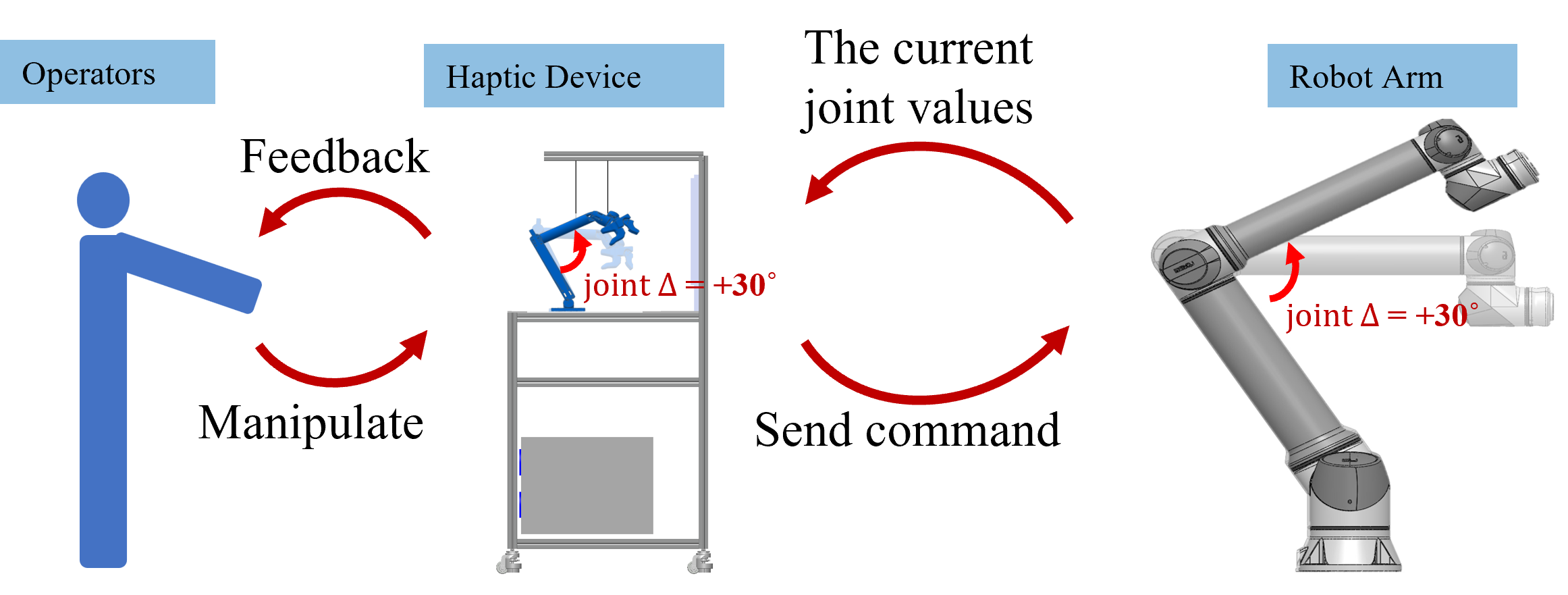
Flow diagram of teleoperation using the haptic device Fig. 4: Flow diagram of teleoperation using the haptic device.

Feasibility Study


A. Robot Drilling

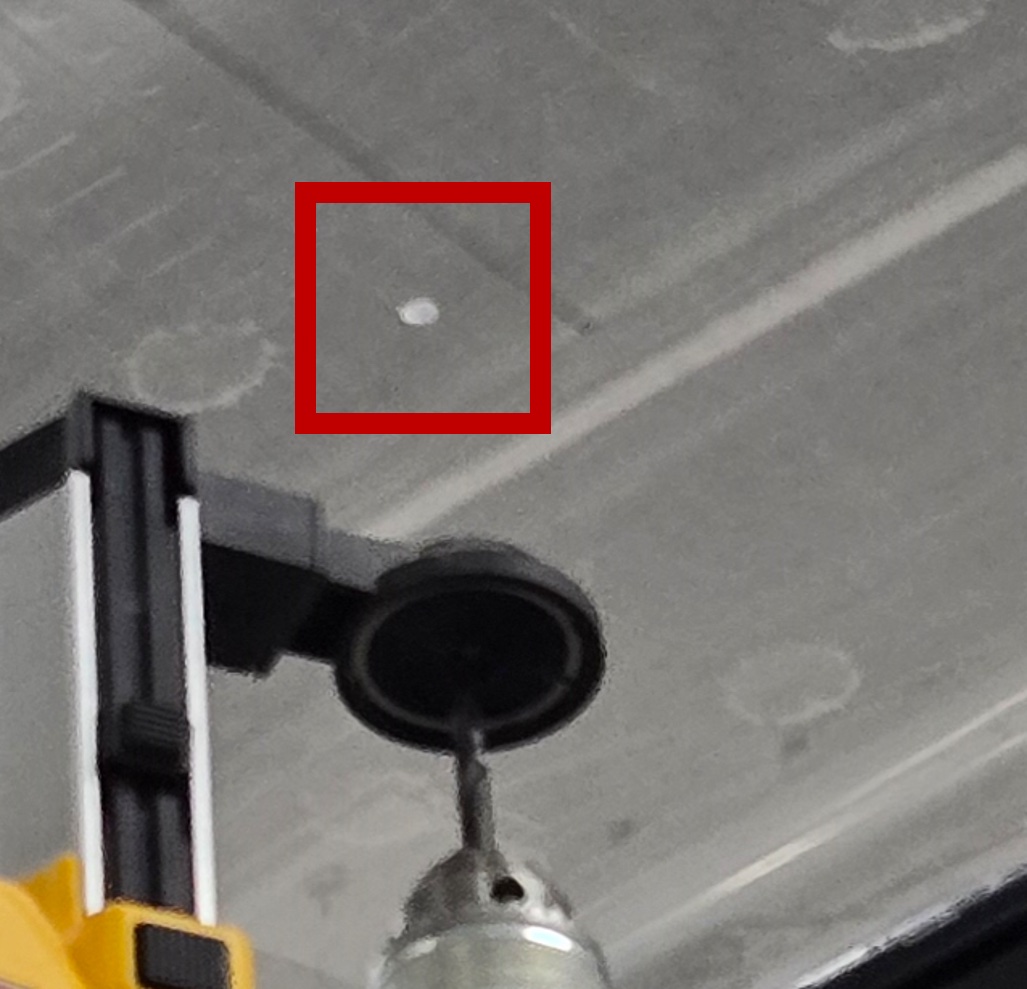
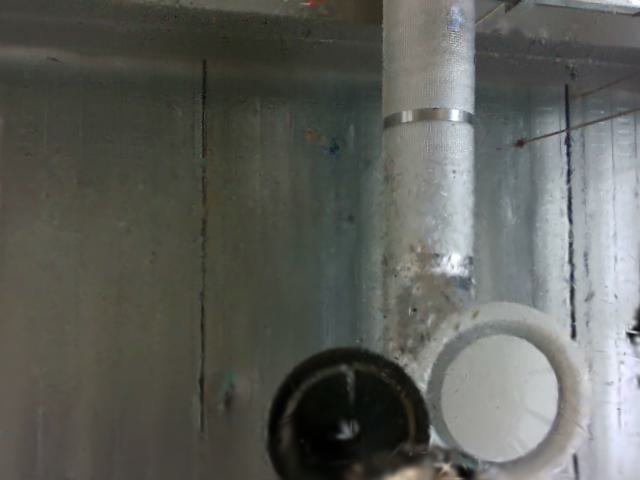
We evaluate the feasibility of the hardware platform for BVLOS teleoperation by performing drilling, anchoring, and bolting on ceilings, which are representative of overhead works. We considered ceilings made of concrete, gypsum, and acrylic materials in three different sites, for a total of 9 experiments. All tasks were successfully performed on concrete and gypsum materials in all three sites. For acrylic, only drilling succeeded, whereas anchoring and bolting failed in all sites. The failure of the two operations is because they rely on frictional forces, which acrylic does not provide due to its smoothness. In contrast, the rougher surfaces of concrete and gypsum offered enough friction for stable anchoring and bolting. We are exploring bimanual operation to address this limitation.
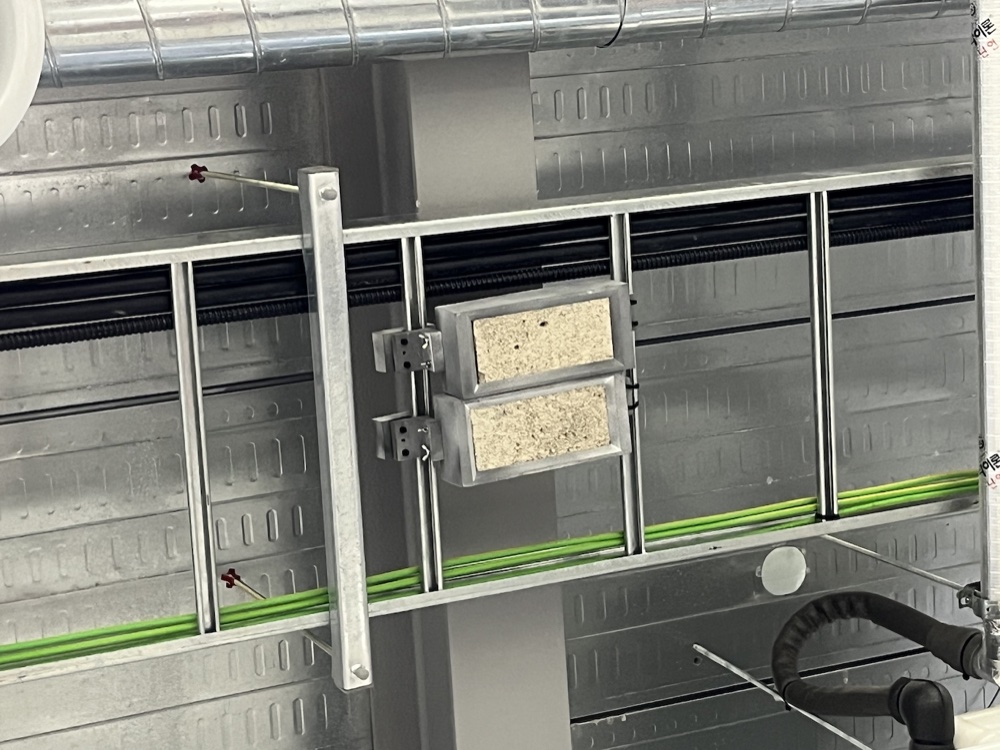
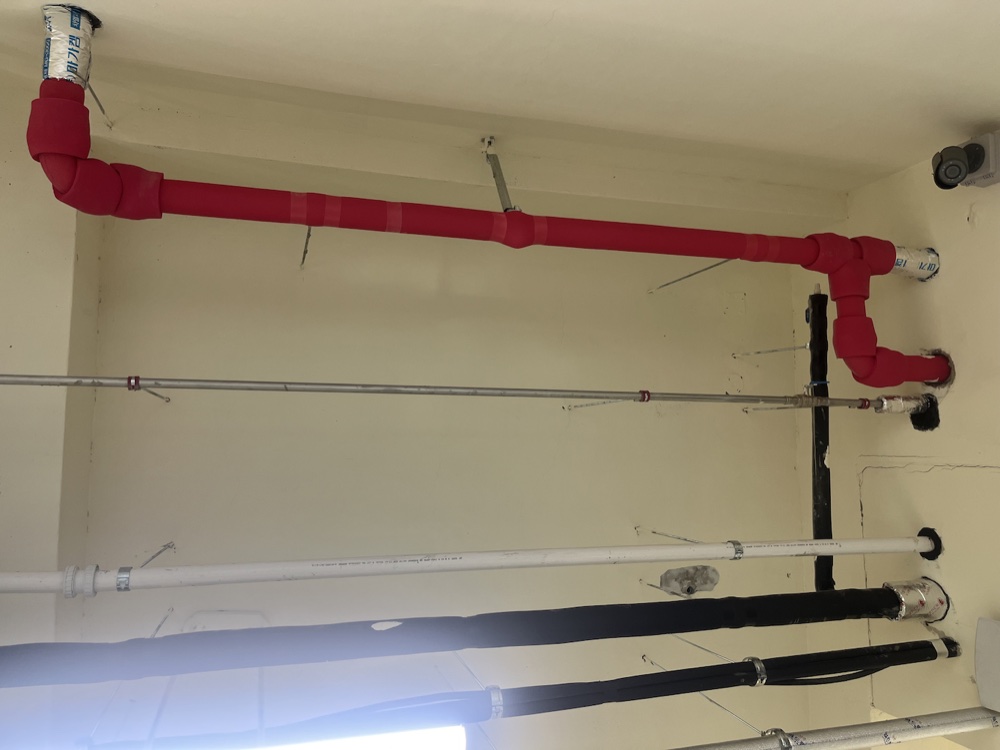
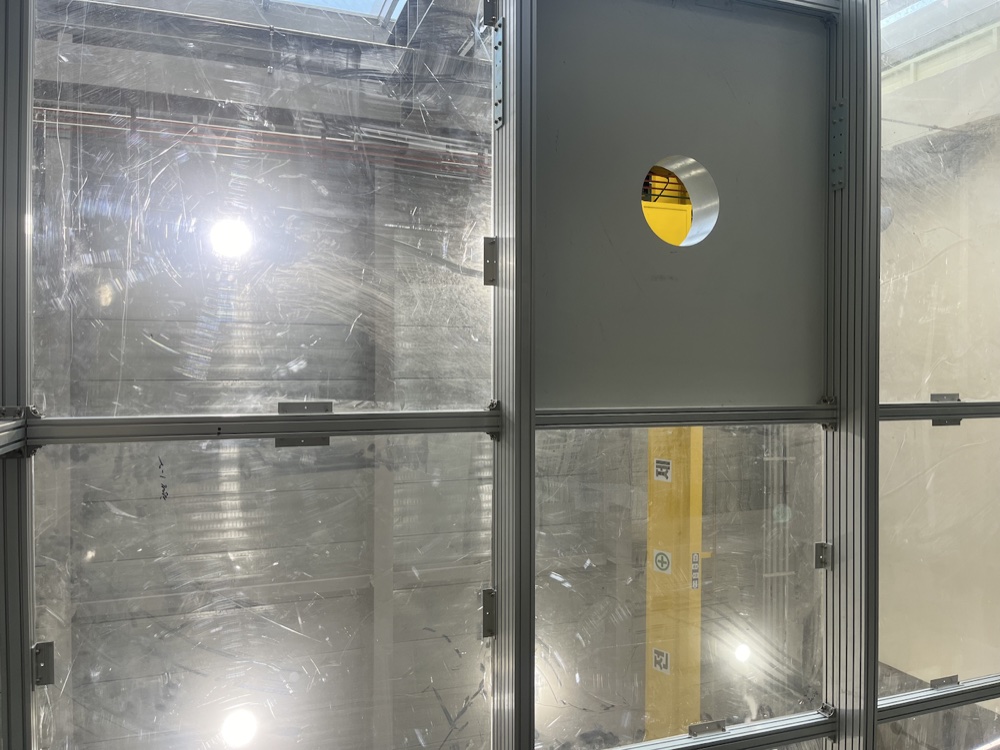
Experimental site 1
Experimental site 2
Experimental site 3

(a) Three different experimental sites
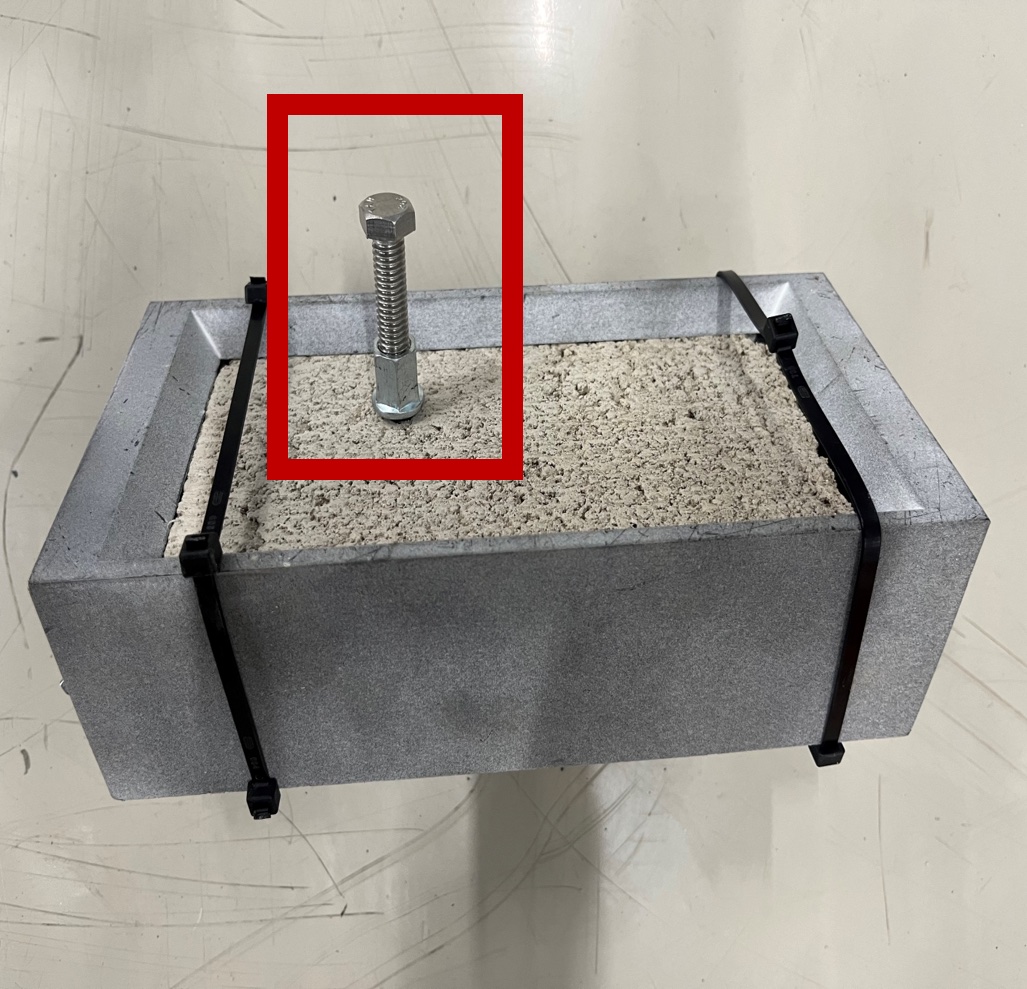
Result at site 1
Result at site 2
Result at site 3

(b) Results from each site

Fig. 5: Experimental sites and results.
Method Experimental Materials
Concrete Gypsum Acrylic
Drilling✓✓✓
Anchoring✓✓✗
Bolting✓✓✗
Table I: Result of the experiments conducted with three different material types in all sites in Fig. 5(a).

B. Planning and Control

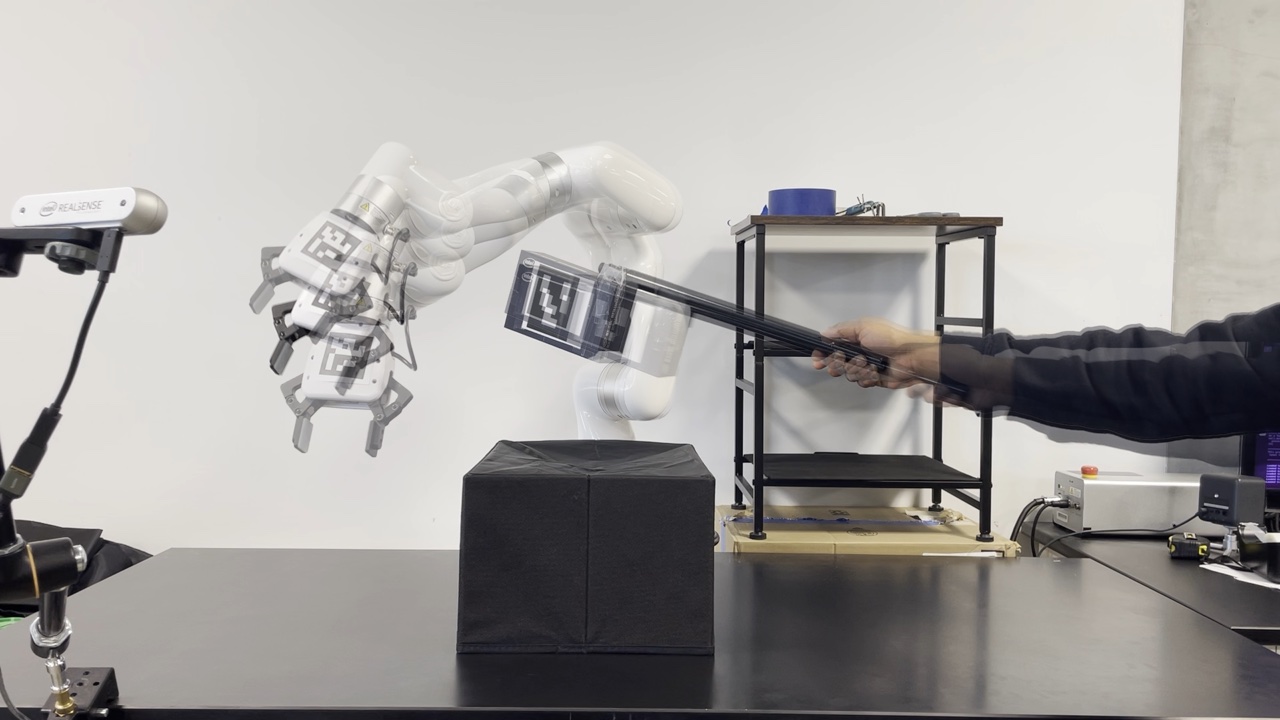
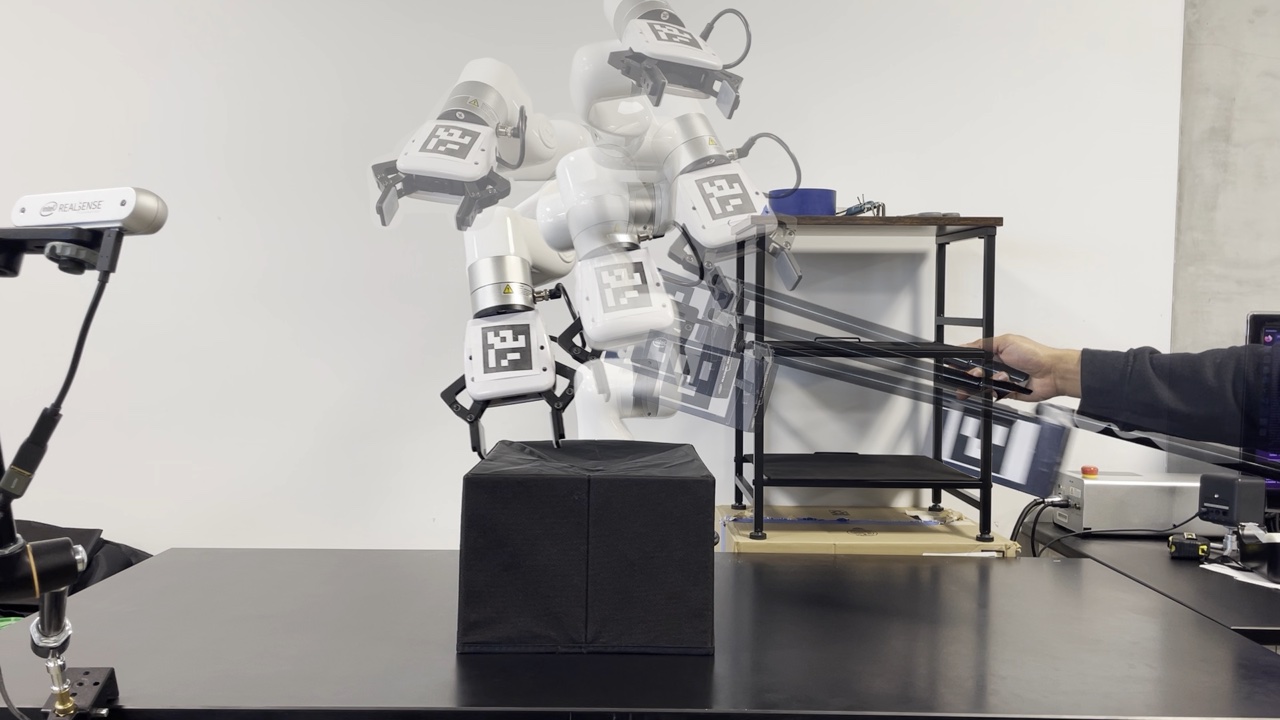
We present an initial evaluation of the suitability of the planning and control modules in dynamic environments using a 6-DoF xArm6 in a laboratory environment. The manipulator was assigned a goal end-effector position to navigate towards in a cluttered environment with both static and dynamic obstacles. A single RealSense D435 camera was used to provide observations of the obstacles from a fixed location, and an Aruco marker was used to track the velocity of dynamic obstacles, which may be replaced with DynaGSLAM. The results in Fig. 6 show that the manipulator follows a nominal trajectory to reach the desired goal configuration, while deviating from the nominal trajectory to avoid incoming obstacles as necessary. We observed that the safe bubble cover significantly reduces the number of collision checks, by up to tenfold compared to other baselines, while yielding comparable path lengths.
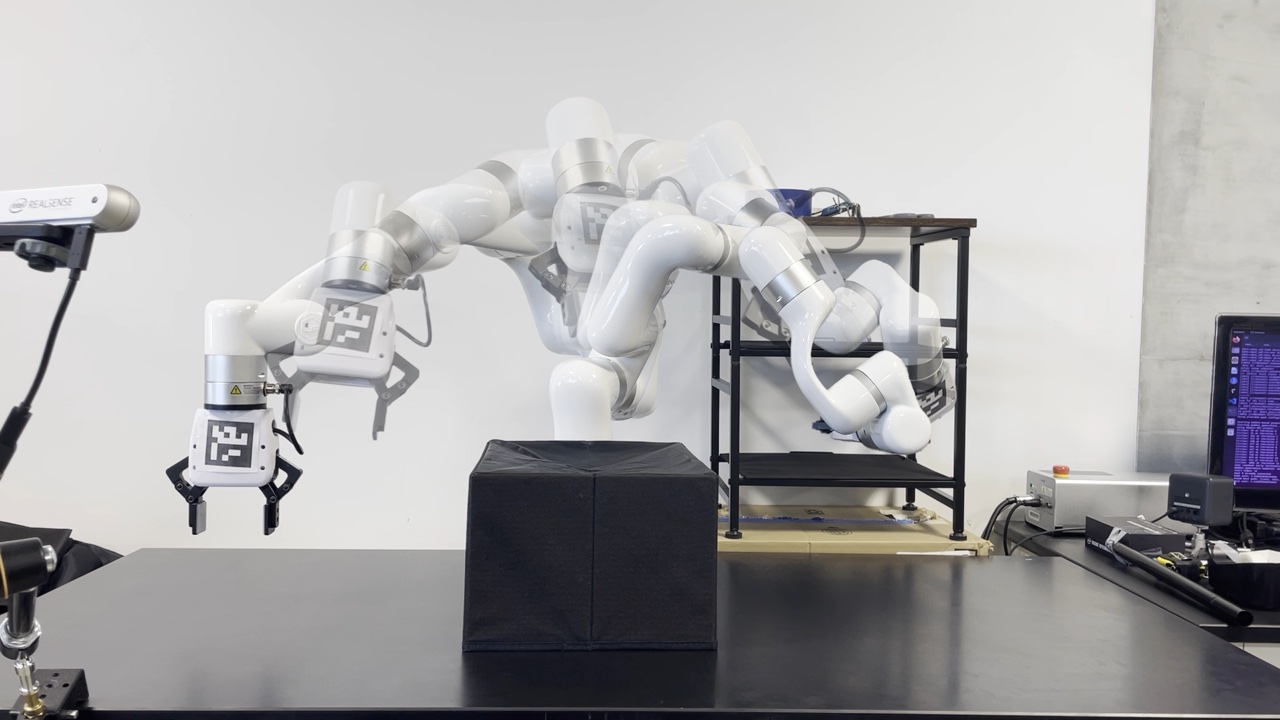

Planned configurations

(a) Planned configurations

Response to dynamic obstacle

(b) Response to dynamic obstacle

Response to dynamic obstacle

(c) Response to dynamic obstacle
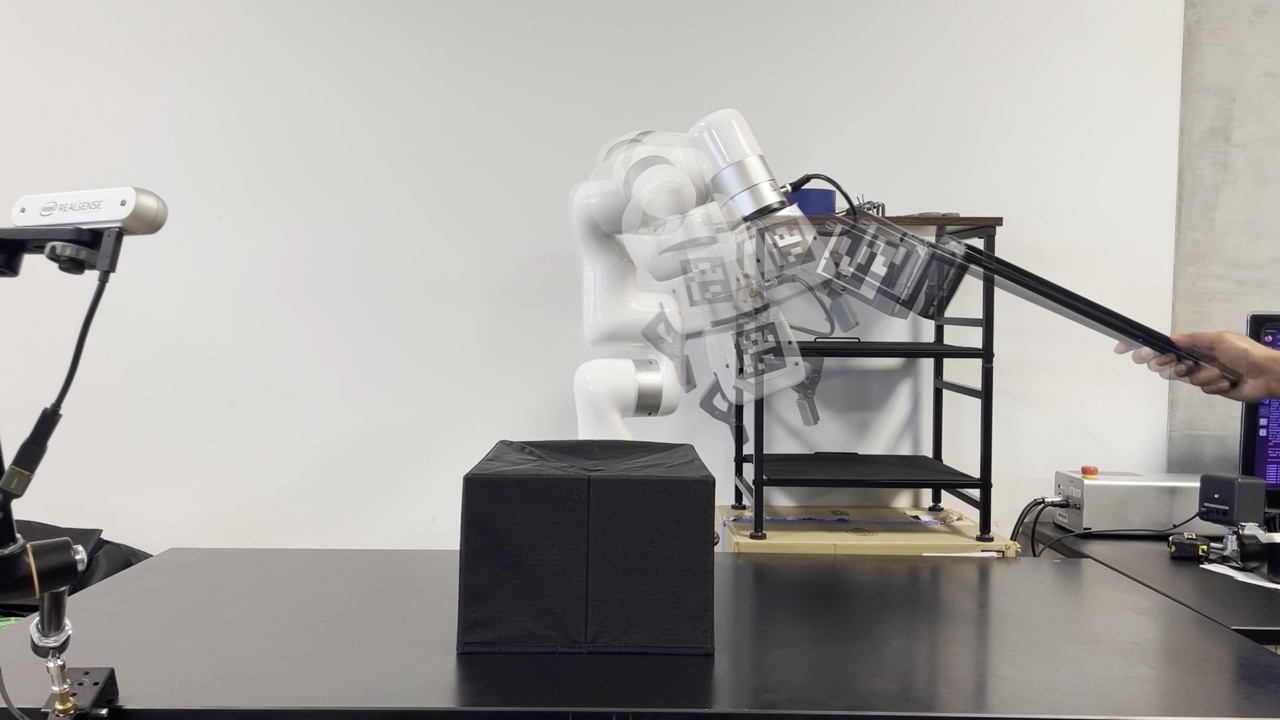
Response to dynamic obstacle

(d) Response to dynamic obstacle

Fig. 6: Bubble-CDF planner and DR-CBF control in a laboratory experiment with a 6-DoF xArm robot.

C. Dynamic Mapping

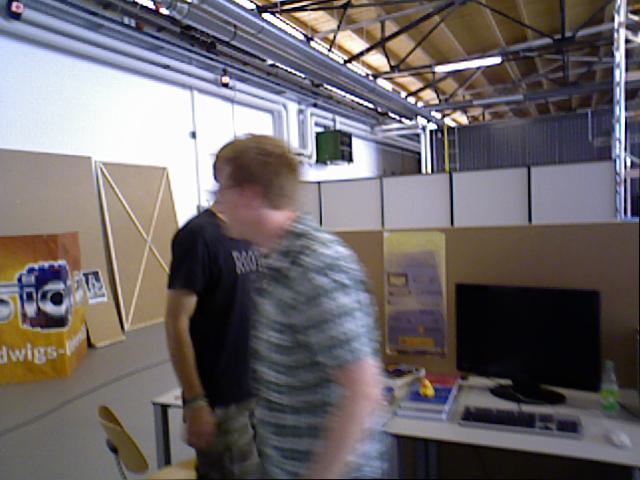
We evaluate dynamic scene reconstruction with DynaGSLAM in two datasets, TUM and one collected during ceiling drilling experiments (Fig. 5). The qualitative results in Fig. 7 and the quantitative results in Table II show that DynaGSLAM renders RGB images accurately. This is owing to accurate reconstruction of dynamic environments despite moving objects and featureless ceilings. Such ability of handling moving objects allows photorealistic visual feedback even as the manipulator or work pieces are moving.
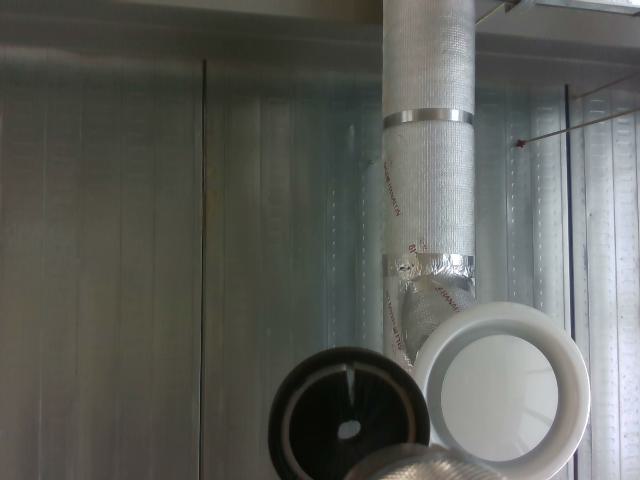

DynaGSLAM on the construction dataset: ground truth

Ground truth

DynaGSLAM on the construction dataset: rendered

Rendered

DynaGSLAM on the construction dataset: error map

Error

(a) Construction Dataset (Fig. 5)
DynaGSLAM on the TUM dataset: ground truth

Ground truth

DynaGSLAM on the TUM dataset: rendered

Rendered

DynaGSLAM on the TUM dataset: error map

Error

(b) TUM Dataset

Fig. 7: Qualitative results of DynaGSLAM. Left: ground truth. Center: rendered. Right: error.
Dataset PSNR (dB) ↑ LPIPS (%) ↓ SSIM (%) ↑
TUM [14]27.220.094.5
Construction (Fig. 5)26.844.784.4
Table II: Image reconstruction accuracy of DynaGSLAM.

Acknowledgment

This work was supported by the Ministry of Trade, Industry and Energy (MOTIE), Korea, under the Strategic Technology Development Program, supervised by the Korea Institute for Advancement of Technology (KIAT) [Grant No. P0026052].

BibTeX

@article{kim2025shared,
  title   = {A Shared-Autonomy Construction Robotic System for Overhead Works},
  author  = {Kim, David Minkwan and Lee, K. M. Brian and Seo, Yong Hyeok and Raicevic, Nikola and Li, Runfa Blark and Long, Kehan and Yoon, Chan Seon and Kang, Dong Min and Lim, Byeong Jo and Kim, Young Pyoung and Atanasov, Nikolay and Nguyen, Truong and Jun, Se Woong and Kim, Young Ouk},
  journal = {arXiv preprint arXiv:2511.09695},
  year    = {2025}
}